
Mikov CLASSIC Butcher's Knives
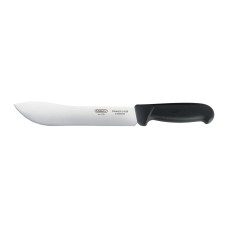
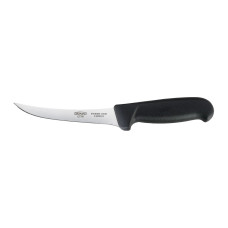
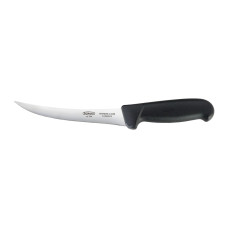
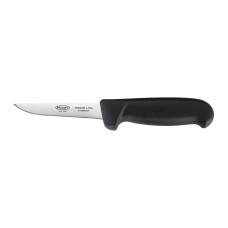
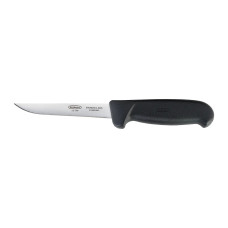
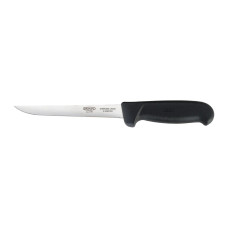
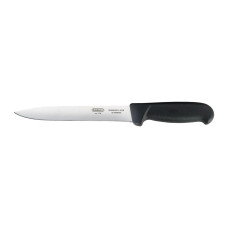
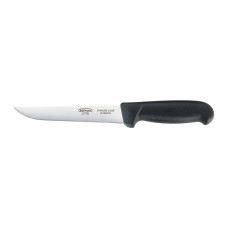
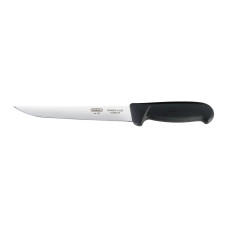
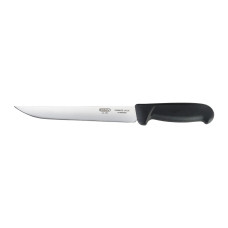
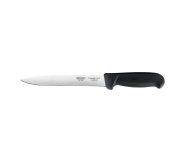
This subcategory collects Mikov's CLASSIC butcher's knives with textured plastic handles. Blade steel is 1.4116 (55–58 HRc), with materials approved for food contact. When choosing within the series, look beyond length to the width and thickness of the blade: they decide how much the knife flexes and how it behaves in meat.
Blade geometry
| Model | Type | Length | Width × thickness | Weight |
|---|---|---|---|---|
| 310-NH-10 / 12 / 15 | straight boning | 100 / 120 / 150 mm | 19 × 2.5 mm | 78–89 g |
| 312-NH-13 / 15 | curved boning | 130 / 150 mm | 22 × 2 mm | 84–86 g |
| 307-NH-15 / 18 | slicing | 150 / 180 mm | 26 × 3 mm | 103 g / — |
| 307-NH-20 | slicing | 200 mm | 29 × 3 mm | 118 g |
| 304-NH-18 | sticking | 180 mm | 26 × 3 mm | 113 g |
| 315-NH-20 | wide, for large cuts | 200 mm | 40 × 3 mm | 145 g |
What the numbers mean
At 19 mm wide, the 310 knives slip easily between ribs and around joints. The curved 312 has the thinnest blade in the series, 2 mm, which makes it easier to cut along the curve of a bone, such as the pelvis or a long bone. The 307 slicers and the wide 315 use 3 mm stock, so the blade does not spring back during a long cut through a big piece, and the 315 is also handy for taking fat off the skin.
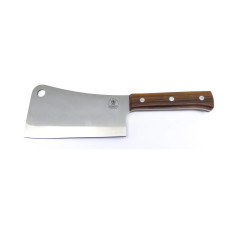
The 76-ND-18 cleaver stands apart. It is the only model here with a wooden handle and EN 1.4034 steel, and at over half a kilo with a 10 cm-deep blade it weighs about five times as much as a slicer. It is made for chopping bone.
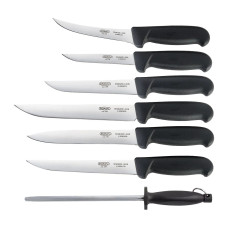
Six core knives of the series are also sold as a promotional set with a round 896-OCR-25 honing steel. The 310, 307 and 304 profiles also come with wooden handles in the LUX PROFI series, while the light home-kitchen knives sharing the CLASSIC name are under CLASSIC kitchen knives.